Project Overview:
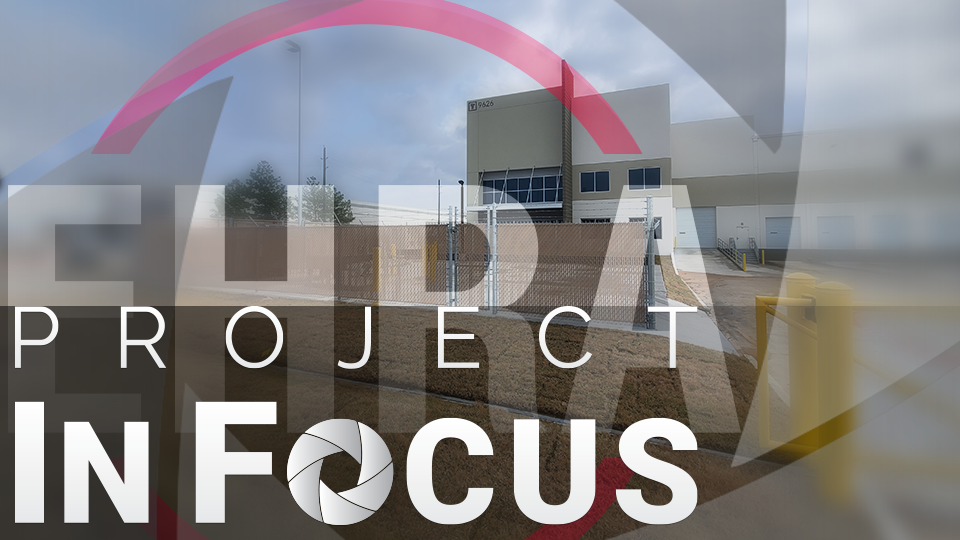
EHRA's Water and Wastewater Management (W&WWM) team, in collaboration with Transwestern developers and WGA Consulting Engineers, successfully designed and constructed a 0.48 MGD Wastewater Lift Station to serve the Fairbanks North Houston Center, a fully commercial development. This project marked the construction of the sixth lift station in the area, which was designed to connect to an existing gravity line that will ultimately discharge into the West Harris County MUD 21 Wastewater Treatment Plant. The scope included the installation of an 8-foot diameter wet well and approximately 2,800 linear feet of force main in Harris County, Texas.
EHRA’s initial site assessment involved a comprehensive evaluation of both the lift station location and the entire force main route. This included capturing photographic documentation and precise measurements to compare with existing plans. Based on this, EHRA developed a preliminary site layout to ensure adequate space for compliance with the City of Houston's design standards and alignment with the developer’s goals.
Early Challenges and Strategic Planning:
At the outset, the project encountered several key challenges that were instrumental in defining its scope and expectations. Given the established nature of the MUD, EHRA conducted extensive research into existing utilities and nearby homeowners, which was critical for navigating the congested corridors along the force main route. With the help of utility maps from CenterPoint and AT&T, and by reviewing several existing design plans along Fairbanks North Houston Road, EHRA identified the most efficient route to minimize disruption and avoid major traffic congestion during construction.
Innovative Solutions and Technological Integration:
The compact nature of lift station sites often presents challenges for routine maintenance and operator access. To address this, EHRA utilized AutoCAD 3D’s Vehicle Tracking software to simulate and optimize the facility's access and egress, ensuring that maintenance vehicles, such as an F250 with a crane arm, could easily navigate the site. This technology played a key role in enhancing both the operational efficiency and overall functionality of the lift station.
Given the significant utility congestion along Fairbanks North Houston Road, which includes gas, water, storm, and internet lines, EHRA recommended and implemented a trenchless installation method for the force main. By utilizing high-density polyethylene (HDPE) pipe and boring the entire 2,800 feet of the force main, EHRA streamlined the construction process, resulting in a more efficient and less disruptive phase of work.
Client-Focused and Cost-Effective Solutions:
EHRA’s commitment to understanding the client’s needs and goals is at the core of our values. Regular internal and client-facing meetings provided opportunities to address critical project aspects, including site layout, cost optimization, scheduling, and power coordination. Under the leadership of Paul Anderson, P.E., EHRA effectively aligned with the client’s preferences, ensuring clear communication and informed decision-making throughout the project.
Key team members such as Ana Bonilla, Engineer III, who designed and drafted the site plans, and Christopher Garwood, CAD Tech III, who developed detailed force main plans and profiles, were instrumental in navigating the project’s complexities. Their efforts helped us make well-informed, cost-effective decisions and enabled contractors to better manage the existing utility congestion along Fairbanks North Houston Road.
Collaborative Multi-Disciplinary Coordination:
The success of the West Harris County MUD 21 project was a direct result of EHRA's seamless internal collaboration across multiple practice areas. While the W&WWM team managed the overall project, our Land Services team, led by CAD technicians, expedited the design of the force main route, taking into account existing conditions to minimize delays. Additionally, our Survey Team, led by Christine Armstrong-Culp, Sr. Survey CAD Technician, provided invaluable support by addressing design changes and assisting with easement reports and other essential tasks.
Sona Juarez, Assistant Field Crew Supervisor, also played a key role in identifying and resolving design discrepancies before fieldwork commenced, ensuring smooth transitions from design to construction. The W&WWM Constructability Team, led by David Stredick, Sr. Construction Project Manager, applied their expertise to proactively address potential issues, which ultimately saved costs and mitigated risks during construction.
Project Outcome and Future Involvement:
The project concluded with a successful bid of $1.18 million, and the contractor received the Notice to Proceed (NTP). As of November 2025, the project was substantially completed and officially closed out. While no further expansion is expected for this lift station, EHRA continues to play an integral role in the future development of wastewater line tie-ins for newly annexed land within West Harris County MUD 21. As the MUD and surrounding areas grow, the W&WWM team remains committed to supporting a sustainable, efficient infrastructure for the region’s future development.