
Identified as a top priority during the development of the District’s Parks Master Plan, this portion of trail was the first phase of over two miles of planned trails to provide connectivity and recreation for District residents.
This project was the second phase of parks implementation outlined in the District's Parks Master Plan, which was completed by EHRA in 2007. Utilizing the site of a recently demolished former wastewater treatment plant provided an opportunity to create a passive park space for District residents.
EHRA worked with the District to create a comprehensive Parks Master Plan, which included recommendations for the development of over two miles of hike/bike trails adjacent to local streets, and within flood control and utility pipeline easements. The District began implementation of the Plan by prioritizing the beautification of West Road, a major arterial street that runs through the District.
The purpose of this project was to convert the existing at-grade crossing of Brazoria County Road 56 (CR 56) and State Highway 288 (SH 288) into a diamond interchange that includes a new overpass bridge and providing access to the newly developed Meridiana Development. Coordination with TXDOT, area landowners, utility companies, and Brazoria County was integral in obtaining approval and acceptance of the project. The main design challenge for this project was to accommodate double intersections on the west side of SH 288 to tie into existing access roads with two-way traffic and a new southbound on-ramp within a close proximity. EHRA coordinated with TxDOT throughout the project from preliminary concepts for the intersection and bridge through final design and construction. Each component of this project was designed in accordance with TxDOT standards and criteria.
The purpose of this project was to convert the existing at-grade crossing of Brazoria County Road 56 (CR 56) and State Highway 288 (SH 288) into a diamond interchange that includes a new overpass bridge. Coordination with TXDOT, area landowners, utility companies, and Brazoria County was integral in obtaining approval and acceptance of the project.
Construction Costs Lowest in 5 Years!
After several years of unprecedented escalation, construction pricing for land development infrastructure is showing meaningful signs of stabilization. EHRA's Construction Services team has analyzed construction bid results from projects across the Greater Houston area and many key infrastructure components have reached their lowest average pricing levels in the past five years.
While pricing remains above pre-2020 levels, increased contractor competition and improved material availability and a more balanced market has led to the recent favorable bidding conditions throughout much of the region.
This result could be a welcomed shift for developers, municipalities and utility districts seeking to maximize project budgets and advance capital improvement programs.
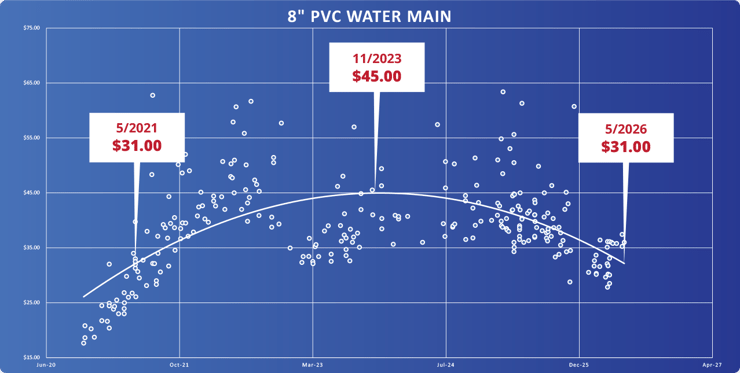
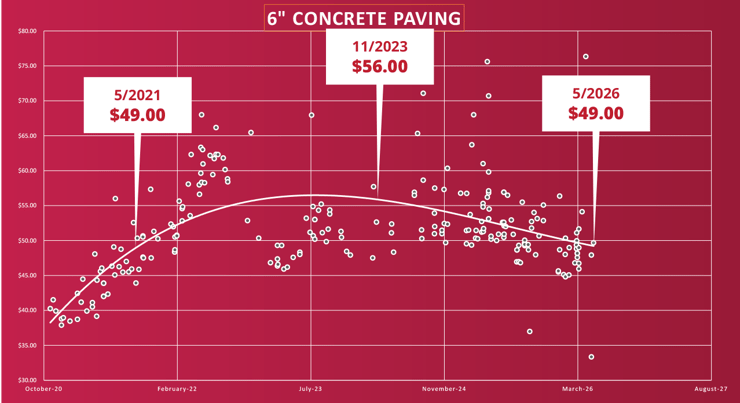
In the charts below, we highlight four key construction cost indicators that serve as benchmarks for many public infrastructure and land development projects: 8-inch waterline, 8-inch sanitary sewer, 24-inch storm sewer and 6-inch pavement. These trends provide valuable insight into current market conditions and can help inform planning, budgeting and project timing decisions.
Let's take a closer look at the numbers.
8" PVC Waterline costs have continued to trend downward from the peak pricing near the end of 2023.
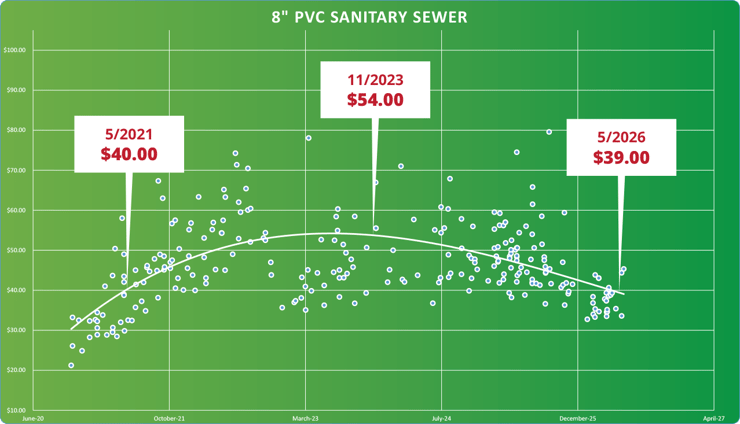
8” PVC Sanitary sewer have continued to trend downward from the peak pricing near the end of 2023.
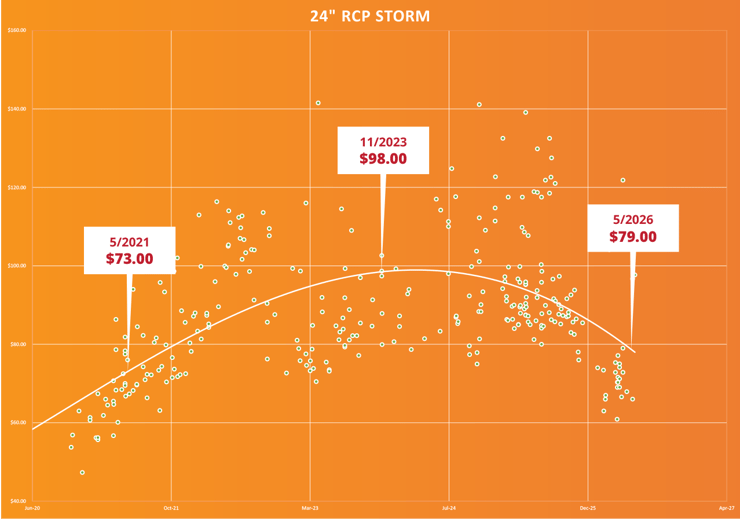
24” RCP Storm Drainage Pipe Cost have continued to trend downward from the peak pricing near the end of 2023.
6” Concrete Paving cost have continued to trend downward from the peak pricing near the end of 2023.
Although market conditions can change quickly, current trends indicate a favorable environment for moving projects forward. EHRA will continue monitoring construction pricing across the region and sharing updates to help our clients make informed planning and budgeting decisions.