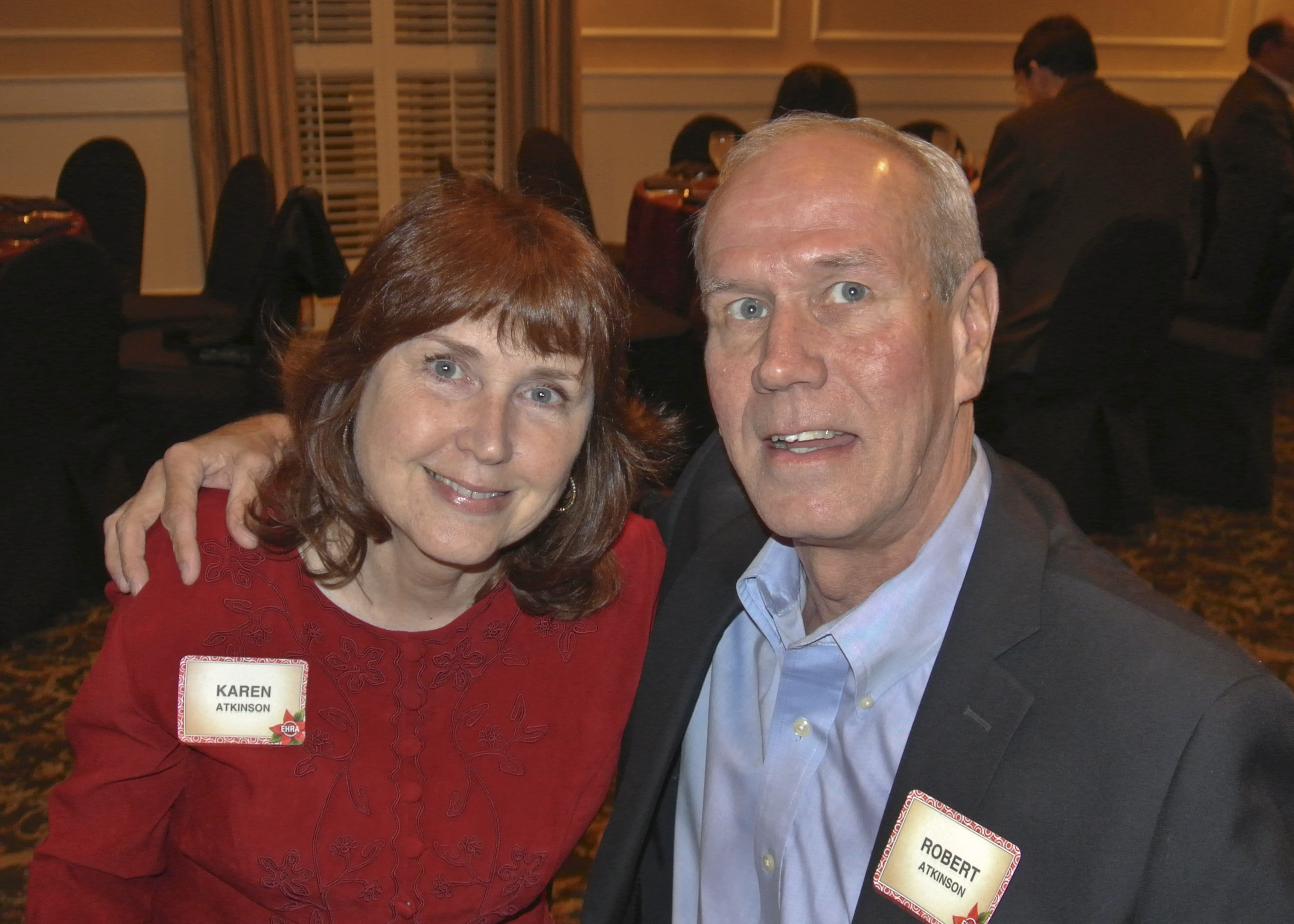
Long before Robert Atkinson, Jr. PE officially joined the firm in October of 2001, EHRA Engineering was already a big part of his life. Before the desk, the title and a set of keys, you could find him running through the hallways as just a kid, trailing behind his dad on the weekends alongside familiar faces including Jim Russ and Charlie Kennedy, Jr.
Robert’s dad worked at EHRA as a planning director at the time and always made sure Robert and his younger brother had something to do, even paying them for it, while they tagged along with him to the office. Robert later realized it was probably just a clever way to keep two young boys busy while giving their mom a day to herself.
Though Robert began paving his own path, initially dreaming of flying for a living, his path shifted in ways that only make sense in hindsight.
Robert interned at EHRA in the summer of 1979, engineering a section of West Road. A project he returned to years later as a district engineer, rehabilitating the very infrastructure he helped design as a young intern. A full-circle moment that perfectly mirrors his entire career.
He studied Aerospace Engineering at Texas A&M with the intention of becoming a pilot because, as he freely admits, it let him avoid the things he dreaded most, reading and writing. He earned his pilot’s license and logged more than 1,100 hours. Life, of course, had other plans. Engineering, people and problem-solving ultimately became his true calling.
Fresh out of school, Robert was Truman Edminster’s first EIT. One of Truman’s earliest lessons? Writing. Truman had Robert draft a client letter—and then rewrite it. And rewrite it again, taking him three or four days to get right. That first red-lined letter became the start of a 40-year working relationship and a friendship that shaped both men. The aerospace engineer who chose his major to avoid reading and writing ended up spending decades crafting reports, letters and solutions…but the right way and always with care.
Robert was one of the cornerstones of EHRA’s rebuild during lean years. When the firm was small, competitive and fighting to grow, Robert was there—curious, relentless and always moving. Over 24 years at EHRA, Robert witnessed the firm evolve from an office of roughly 30 people to the high-caliber, deeply collaborative organization it is today. He often speaks about quality, not just of work, but of people. About learning to ask for help and about owning your work, both the good and the bad.
That philosophy shaped Robert not just as an engineer, but as a mentor. District Services, as he describes it, isn’t just about technical expertise, it’s about people. Knowing them. Understanding how they think. Recognizing their trigger points. Building trust. Robert was exceptionally good at that part of the job.
“He’s got a way with people,” Truman said. “He was our secret weapon. On jobs where I might’ve gotten crosswise with someone, Robert could come in and smooth it all over and maintained those relationships throughout his entire career.”
That natural kindness paired with quick wit and impeccable comedic timing are what makes Robert truly unforgettable. Whether he’s describing a Thanksgiving leftovers sandwich with the emphasis on the yellow-bag Lay’s potato chips, or a White Castle burger cooked just right on a bed of onions, Robert doesn’t just tell stories, he invites you into them.
And when the work got hard—as it often does—Robert showed up. Early mornings. Late nights. Lean years. Rebuilding years. Big projects that are still standing decades later, filled with kids riding bikes, neighbors walking trails and communities living their lives.
“I know those streets,” Robert says. “I know the names. I know they’re going to be there long after I’m gone.”
That, to him, is success, The projects, yes, but even more so, the people and relationships built along the way.
In reflection of his career and upcoming retirement, Robert expressed his feelings of relief and the sense that the tank is finally empty after decades of giving everything he had. And yet, the hardest part isn’t leaving the work, it’s leaving the people.
“I think when you’ve done it right, that’s the feeling you have at the end,” Robert said. “The saddest thing in the world is leaving all of these people.”
However, Robert fully intends to keep showing up—quietly sitting in the corner of his district meetings, eating lunch, visiting with familiar faces. Just because the chapter is ending doesn’t mean the relationships are.
After 24 years at EHRA, and more than 40 years of shared history with many of the people inside its walls, Robert leaves behind a legacy built not just of concrete and calculations, but of kindness, mentorship, laughter and trust.
It’s been, as Robert himself would say, “a hell of a good run.” And one that will be felt for a very long time to come.